

Once in a blue moon, if you watch Netflix, you would come across many documentaries that depict successful characters, millionaires or even billionaires, who run foul of the law and become fugitives. Mostly for the so-called “white collar crimes”. These cases; unlike those “blue collar” or even “collarless” crimes are not so obvious to the eye. Unlike the usual cases like drug trafficking, prostitution and the like. So it’s pertinent that you know the potential pitfalls so that you can avoid it early. Lest you find yourself getting entangled in crime without even realizing it.
So much so if you are planning to venture your business out to the overseas market. You might have been approached by a so-called “angel investor”, who seem very interested to give you a very lucrative deal or proposal. They are offering colossal amounts of funds, when you are already struggling to get a meager loan since the local banks seem so intent on giving your business a hard time. Who can resist easy money?
Cash Is still King, right?
Be extra careful and wary before getting involved in these kind investors. Especially if their nature of business is not clear, or shady. You must know how do they earn their money before deciding to expose your business operations to them.
Which brings us to the world of money laundering. As the name suggests, this process is about “cleaning dirty money”. Suppose you are a crook, and you make a sinful amount of money from your illegal business. How do you justify to your neighbour (also the public and the authorities) your filthy riches? One easy way is of course to pretend that you have a legit business. Ideally, the business should be seen as cash rich and profitable, or those which accounts are very hard to trace and justify. So you see many empty shops, but they survive even without a regular flow of customers. The most easy would be to sell items of intangible value; such as paintings and antiques (can be cars or furniture et cetera). Or invest into other legit businesses such as yours.
This is where the danger lies.
You might be opening your legit businesses to receive illegal funds, or to put it simply, accepting “dirty money”. Before you even realize it, you could already be an accomplice in an international money laundering scheme of an equally international criminal racket.
Typically, money laundering concerns thrive in offshore companies. They can be registered anywhere in Hong Kong, Singapore, Labuan, Marshall Islands, Samoa, Vanuatu, Vietnam, Malta, Netherlands, Liechtenstein, Luxembourg, Swiss, Cyprus, Gibraltar, British Virgin Islands (BVI), Belize, Cayman Islands, Anguilla, Bahamas, Panama, Nevis, St. Vincent, Dubai, Seychelles, Mauritius, Delaware et cetera. These are favourite places because they offer incentives such as privacy as well as offering to be a tax haven. Perfect for money laundering.
Don’t get fooled by these exotic sounding places. Most of the time, they are just small lawyer offices on the second floor of very humble shophouses; probably on top of a souvenir shop in a seaside beach town like our very own Port Dickson. Which is not to say that all offshore companies are bad companies. Most of the times, creating an offshore company is desirable for tax and accounting purposes. After all, there is an obvious difference between tax avoidance and tax evasion. The former is legal; the latter is not. But you have to be careful when dealing with an offshore company. Make sure you completely know the owner, and perfectly understand its business.
For those that insist to remain shrouded in secrecy, it’s best to quickly and smartly go away, no matter how attractive the proposition is. When dealing with the United States, you would find a lot of provisions that are targeted to shoot down any potential money laundering activities.
In Malaysia, we have the Anti-Money Laundering, Anti Terrorism Financing and Proceeds of Unlawful Activities Act, 2001 (Act 613) or the AMLA in short. They have vast powers vested in them to search, trace and clawback any proceeds from illegal activities. One of the usual “modus operandi” (mode of operation) of a money launderer is called “layering”. Normally, to be safe, the money should be “recycled” seven times. Which is not unlike you doing obsessive laundry by washing your clothes seven times. After the seventh layer, it’s already very hard to trace. No amount of inter-country Mutual Legal Assistance (MLA) can succeed in finding and recovering the originally “dirty” money. It’s already “clean”.
Moral of the story is, don’t let your hard earned legit business get entangled in this delicate web of the underworld. You just don’t know where you are in their grand scheme of things. Probably one of these days, in the near future, your shop gets raided by the authorities.
We certainly do not want that to happen to you, our valued client. So, at CSQlaw , we assist to properly and diligently make sure that our client, deal with a legit international business partner. We will go out of our way and do whatever it takes to ensure that the other party is a genuine entity with a respectable business module.
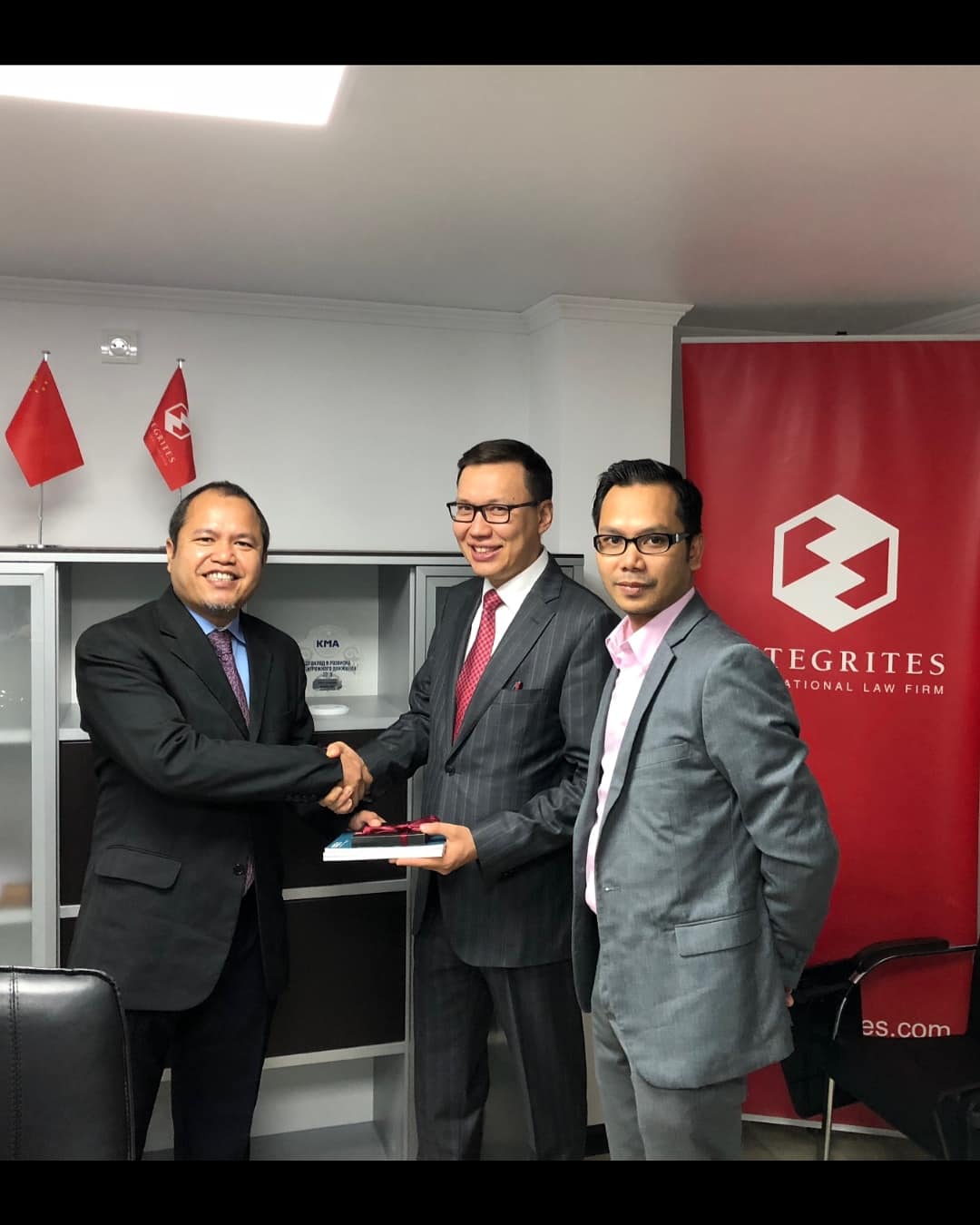
Come talk to us about any prospective partners and proposed ventures you have in the pipeline and lets strategize them together.Let’s make 2023 into a very successful one.May God Bless Us All. (The picture was taken in 2018 during our visit to Integrites, one of the established law firms in Almaty, Kazakhstan.)
